Categories
Vrindavan

Radha Gokulananda temple, Vrindavan – founded by Viswanath Chakravarti

radha gokulananda

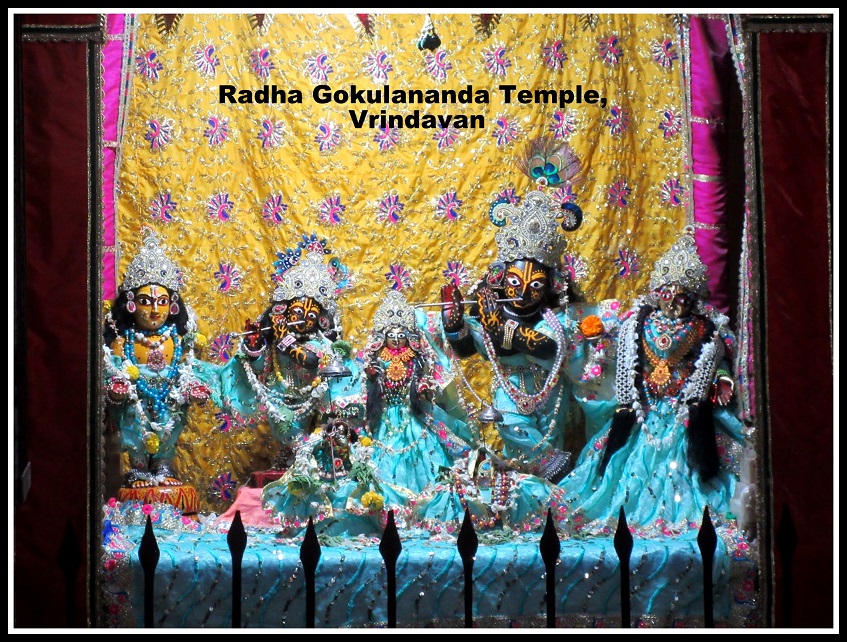
As the sun began to rise over the holy city of Vrindavan Mathura, the Radha Gokulananda Temple stood tall and proud near the Kesi ghat on the banks of the tranquil Yamuna River. The temple was a vision brought to life by the revered Viswanath Cakravarti, who saw the need to unite the deities of Radha-Vinoda, Vijaya Govinda, Radha Gokulananda, and Chaitanya Mahaprabhu under one roof. Walking through the temple’s doors, visitors were greeted by the small Radha-Vinoda Deities of Lokanatha Goswami, which were lovingly carved and meticulously adorned with precious jewels. Nearby, the larger deities of Vijaya Govinda of Baladeva Vidyabhusana towered above, exuding an air of regal elegance. And at the center of it all, stood the radiant Radha Gokulananda Deities of Viswanath Cakravarti, the very embodiment of divine grace and beauty.

Categories
Vrindavan

Radha Shyamsundar Temple, Vrindavan – Founded by Shyamananda Pandit

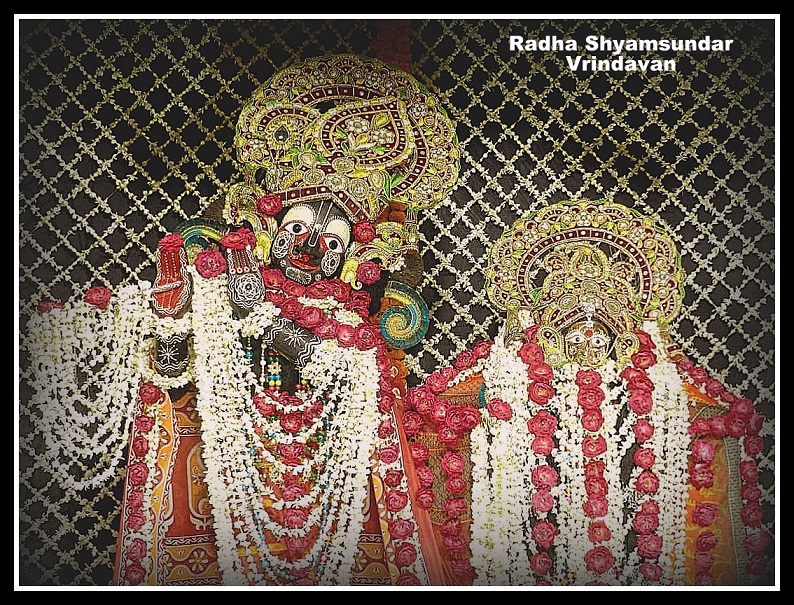
radha shyamsundar vrindavanRadha Shyamsundar temple is a renowned temple located in Vrindavan, India. The temple is dedicated to the divine couple Radha and Shyamsundar, also known as Krishna. The temple is steeped in rich history, and is considered to be one of the most important pilgrimage sites for Gaudiya Vaishnavas. In this article, we will delve deeper into the history and significance of Radha Shyamsundar temple, and explore the unique spiritual experience it offers to its visitors.

Sri Vrindavan Dham is a revered pilgrimage site, said to be holier than any other. According to legend, even celestial beings yearn to be born on this sacred land, sanctified by the touch of Krishna’s lotus feet. Among the seven main temples of the Gaudiya Vaishnava sect in Sri Vrindavan Dham, the temple of Sri Sri Radha Shyamsundar holds a special place in the hearts of devotees. This is due to its unique deity, Sri Shyamsundar, who is believed to have manifested from Srimati Radharani’s heart. Prominent acharyas of the Gaudiya Vaishnava cult, including Srila Jiva Goswami, Sri Gopala Bhatta Goswami, Srila Loknath Goswami, and Sri Bhugarbha Goswami, would visit the temple regularly for darshan of Sri Shyamsundar. The sight of the deity would immerse them in an ocean of ecstasy. Srila Raghunath Dasa Goswami and Srila Krishna Dasa Kaviraja Goswami, who were advanced in age and had physical difficulties, also made the effort to visit the temple for darshan. Even the recent Gaudiya Vaishnava Acharyas, such as Srila Bhaktisiddhanta Saraswati Goswami Thakur and Srila Bhakti Sarang Maharaj, would become overwhelmed with emotion upon seeing the deity. Srila A.C. Bhaktivedanta Swami, founder of ISKCON, would often weep upon seeing Sri Shyamsundar.
Categories
Vrindavan

Radha Raman temple, Vrindavan – founded by Gopal Bhatta Goswami

radha raman temple vrindavan

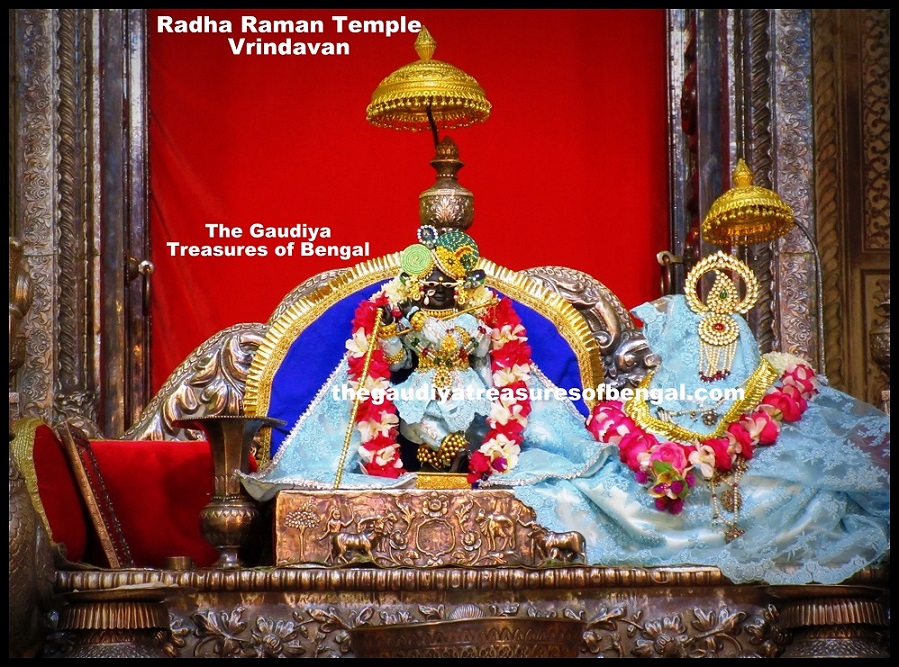
As I traveled through the narrow lanes of Vrindavan, I felt an overwhelming sense of spiritual potency in the air. The ancient buildings and winding pathways seemed to transport me to another time and place. As I walked, I stumbled upon Radha Raman temple, one of the seven renowned temples of Vrindavan. The temple’s grandeur was breathtaking, with intricate carvings and vibrant colors adorning every inch of the structure. As I stepped inside, the atmosphere was electric. Devotees chanted hymns and prayers, filling the temple with an energy that was palpable. The sound of bells and cymbals filled the air, adding to the ambiance of the holy place.

Categories
Vrindavan

Radha Damodar temple, Vrindavan – All you need to Know

radha damodar

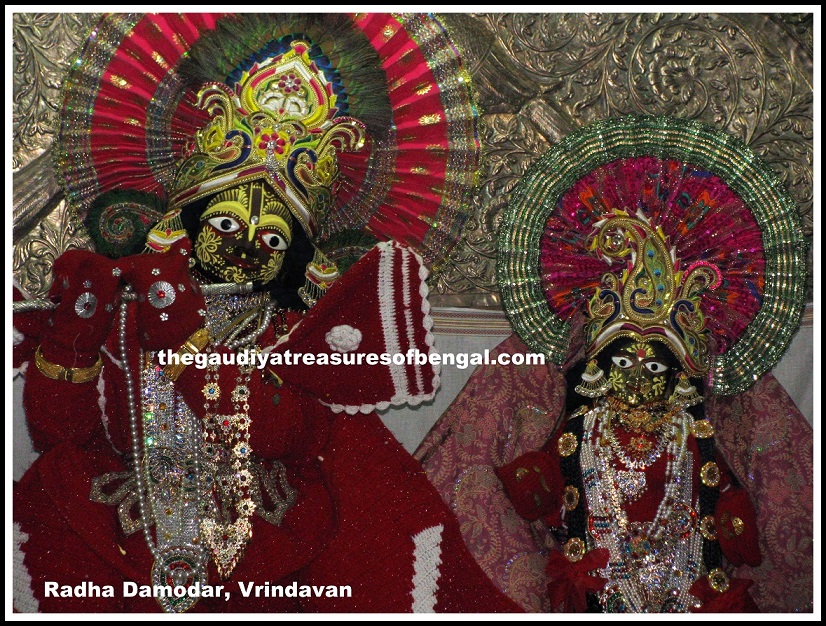
As I made my way through the bustling streets of Vrindavan, the air was filled with the sweet fragrance of incense and the sound of temple bells. As I navigated my way through the labyrinthine alleys, my eyes caught sight of a magnificent structure, nestled in the heart of the city – Sri Radha Damodar Mandir. As I approached the entrance of the temple, I could feel a sense of peace and tranquility enveloping me. I knew I had to step inside and experience the divine energy that emanated from within. The address of Sri Radha Damodar Mandir was etched in my memory, and I knew I would never forget the awe-inspiring beauty of this sacred place.

Categories
Vrindavan

Radha Gopinath temple, Vrindavan : Founded by Madhu Pandit

radha gopinath vrindavan

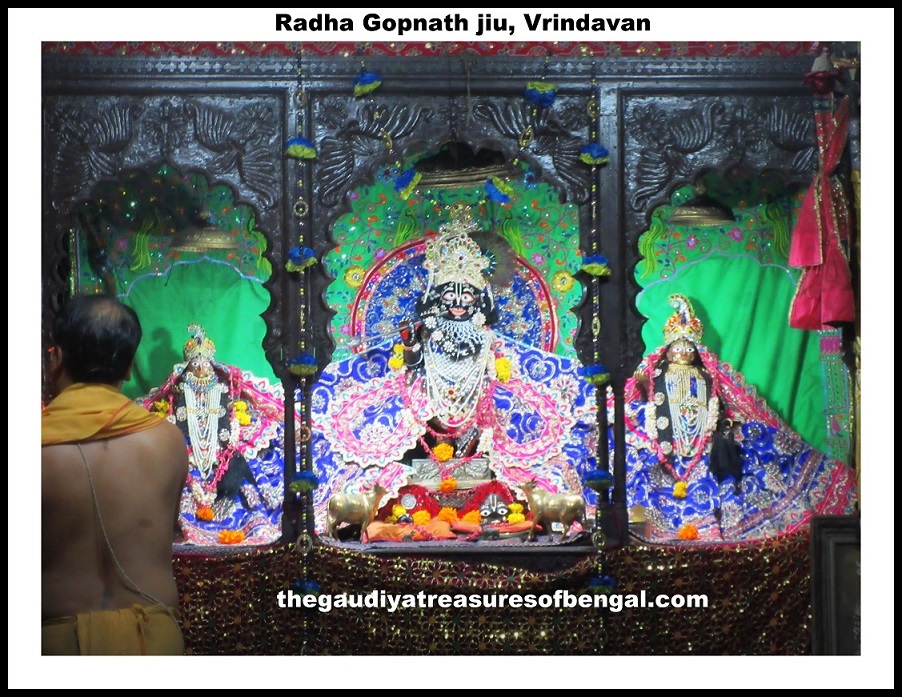
Just a few minutes’ walk away from Govindaji’s temple stands an awe-inspiring temple that reflects a glorious past, founded by Madhu Pandit Goswami. The presiding deity of this temple is none other than Gopinatha, who was originally installed by Vajranabha, the grandson of Lord Krishna, about 5,000 years ago. According to the accounts, Vajranabha had three deities carved based on the descriptions of Krishna given by Uttara, Parikshit’s mother. The remarkable aspect of this Deity is its striking similarity to the charming torso of Lord Krishna, extending from the navel to His neck. It is believed that if one is fortunate enough to catch a glimpse of the three Deities – Sri Madana-mohana, Sri Gopinatha, and Sri Govinda Deva – within a single day, before sunset, they receive the divine blessings equivalent to having the sacred vision of Lord Krishna Himself. Such a rare opportunity is considered to be a great spiritual boon in the eyes of devotees.

Categories
Vrindavan

Radha Govinda Temple, Vrindavan : History and Details

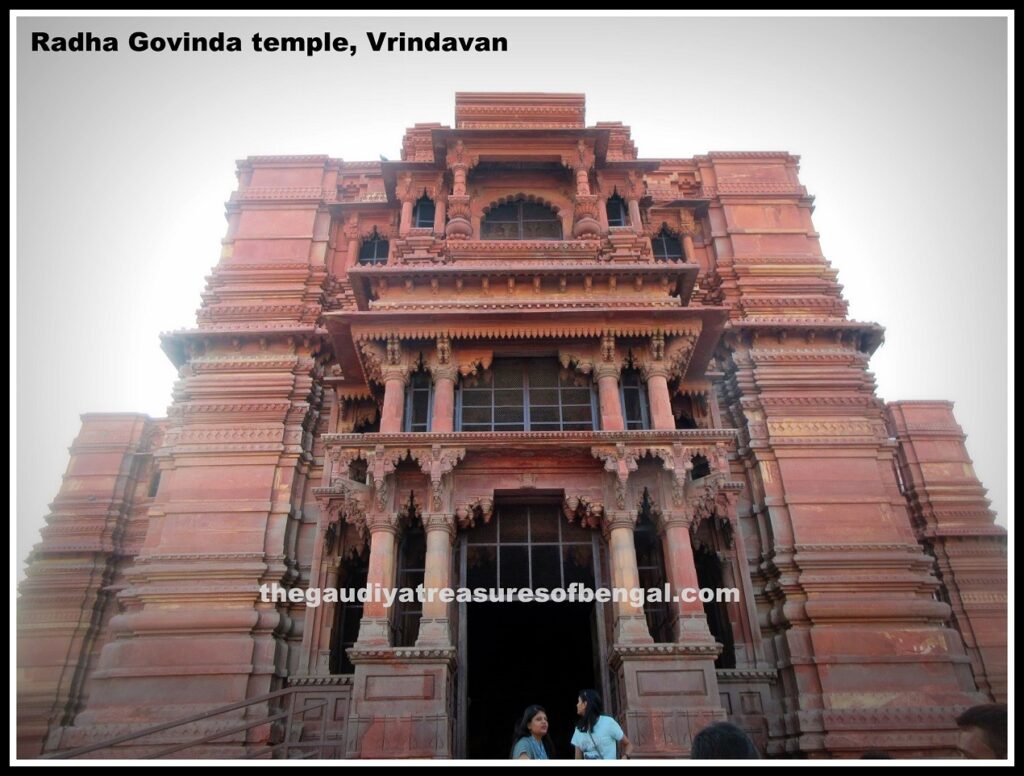
radha govinda temple vrindavanAccording to the legends, the Deity of Radha Govinda deva is considered one of the three exquisitely carved Krishna Deities by Vajranabha, great grandson of Krishna, under the watchful guidance of Uttara. The striking feature of this Deity is its uncanny resemblance to the beautiful face of Lord Krishna. It is believed that if one is fortunate enough to catch a glimpse of the three Deities – Sri Madana-mohana, Sri Gopinatha, and Sri Govinda Deva – within a single day, before sunset, they receive the divine blessings equivalent to having the sacred vision of Lord Krishna Himself. Such a rare opportunity is considered to be a great spiritual boon in the eyes of devotees. In his writings, Srila Rupa Gosvami poetically describes Mathura-mandala, recalling the mesmerizing image of Lord Krishna (Govinda) standing by the picturesque banks of the Yamuna River, amidst the serene surroundings of blooming kadamba trees and melodious chirping of birds in the lush gardens. These vivid impressions have left an indelible mark on his consciousness, leading to a continuous state of transcendental realization, where the sublime beauty and bliss of the Lord are constantly felt and experienced. Srila Rupa Gosvami’s evocative depiction of Mathura-mandala and Lord Krishna’s enchanting presence therein, inspires devotees to seek a deeper connection with the divine and revel in the spiritual ecstasy of the Lord’s sublime presence.

Categories
Vrindavan

Radha Madan Mohan Temple, Vrindavan

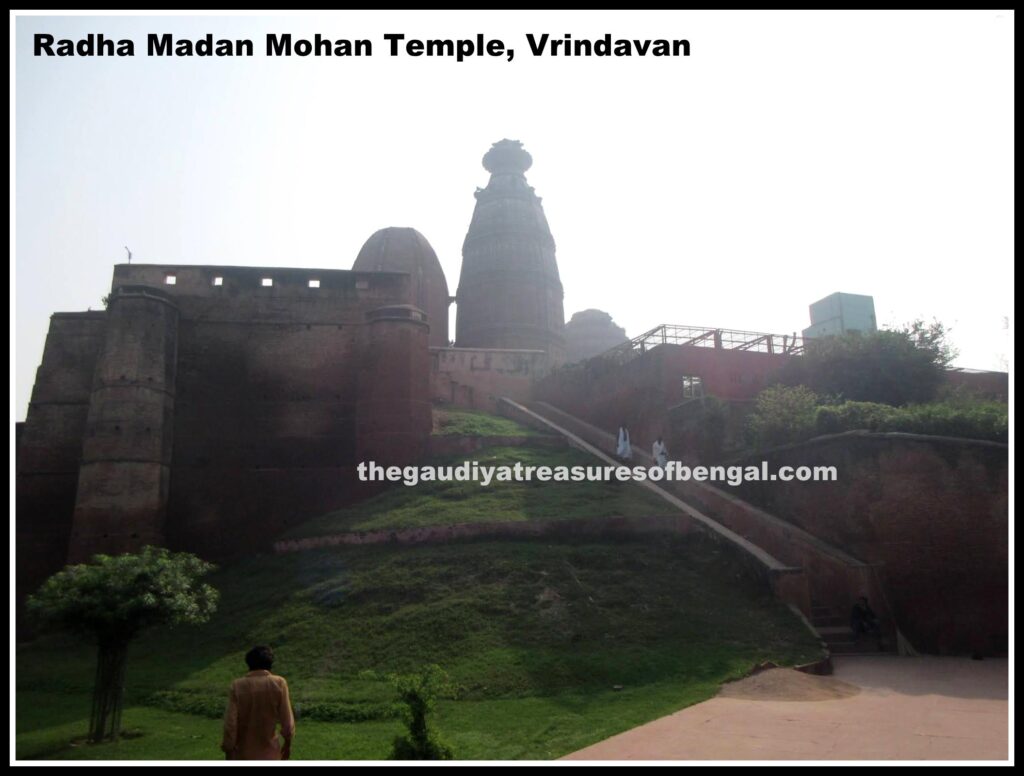
radha madan mohan vrindavanThe Madan Mohan Temple, a renowned religious site in Sri Vrindavan dham, rests on a small hillock that holds a fascinating tale from the time of Lord Krishna’s presence on earth. The hillock was originally situated by the banks of the river Yamuna during Krishna’s pastimes. It gained fame due to an event that took place after Krishna’s encounter with the venomous serpent Kaliya. Following a grueling fight with Kaliya in the Yamuna, Sri Krishna emerged from the river, drenched and shivering from the cold water. He climbed the hillock to bask in the sun and dry himself. To warm Krishna, 12 suns manifested in the sky and shone down upon the hill. As a result, the hillock was named Sri Dwadashaditya Tila, and the spot where Krishna’s perspiration collected was called Praskandan ghat.
Categories
Kaman (Kamyavan)

Charan Pahadi, Kamyavan (Kaman), Rajasthan

charan pahadi kaman kamyavan

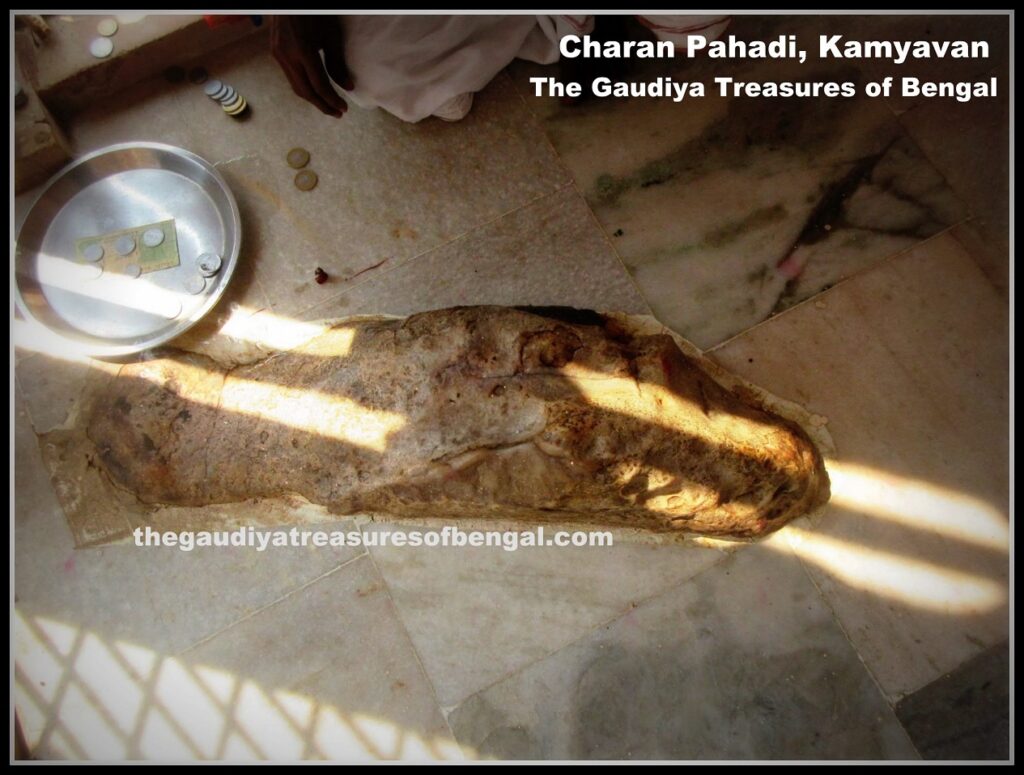
Charan Pahadi is located in the village of Angrawali, approximately 4 kilometers to the South-West of Kaman. Here, you can find the largest and most significant imprint of Sri Krishna’s feet on a stone in the entire Vraja Mandala. In addition to the lotus footprints of Krishna, visitors can also observe the footprints of the gopis, cowherd boys, and cows at this location. The term ‘Charana’ refers to ‘lotus feet’, while ‘Pahadi’ means ‘hill’ or ‘small mountain’. This place is sometimes referred to as Charana-chinha, with ‘Chinha’ signifying that the impression of the Lord’s lotus feet is indented onto the rocks.

Categories
Kaman (Kamyavan)

SetuBandha, Rameshwaram, Kaman, Rajasthan

setubandha rameshwaram kamyavan kaman

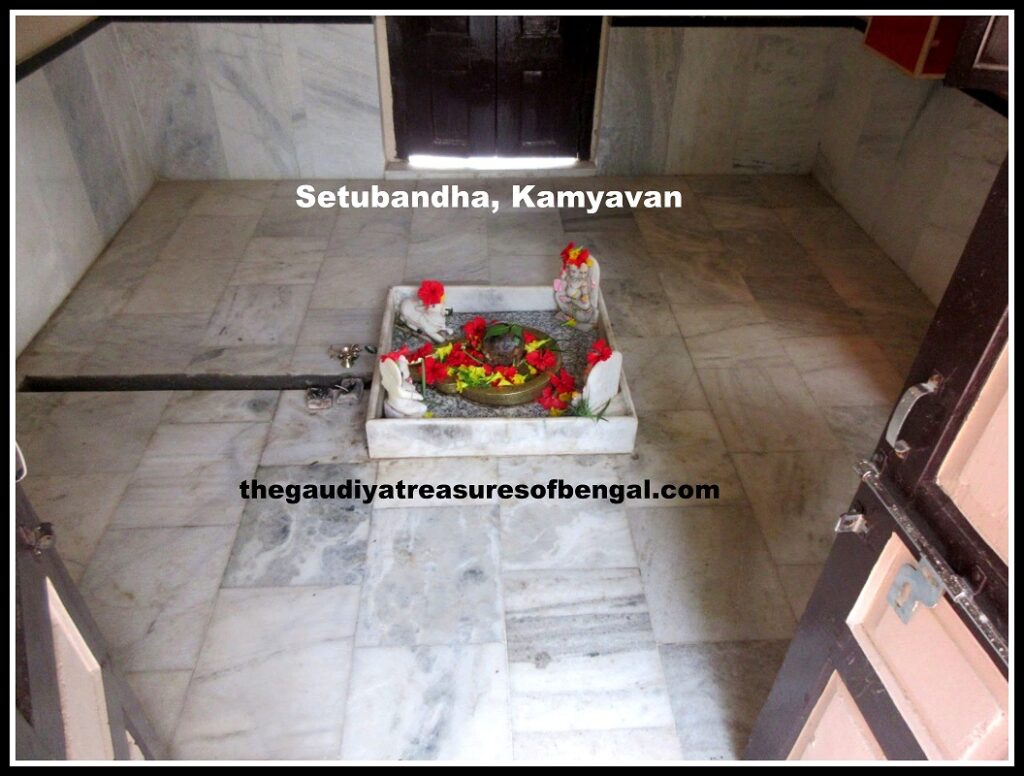
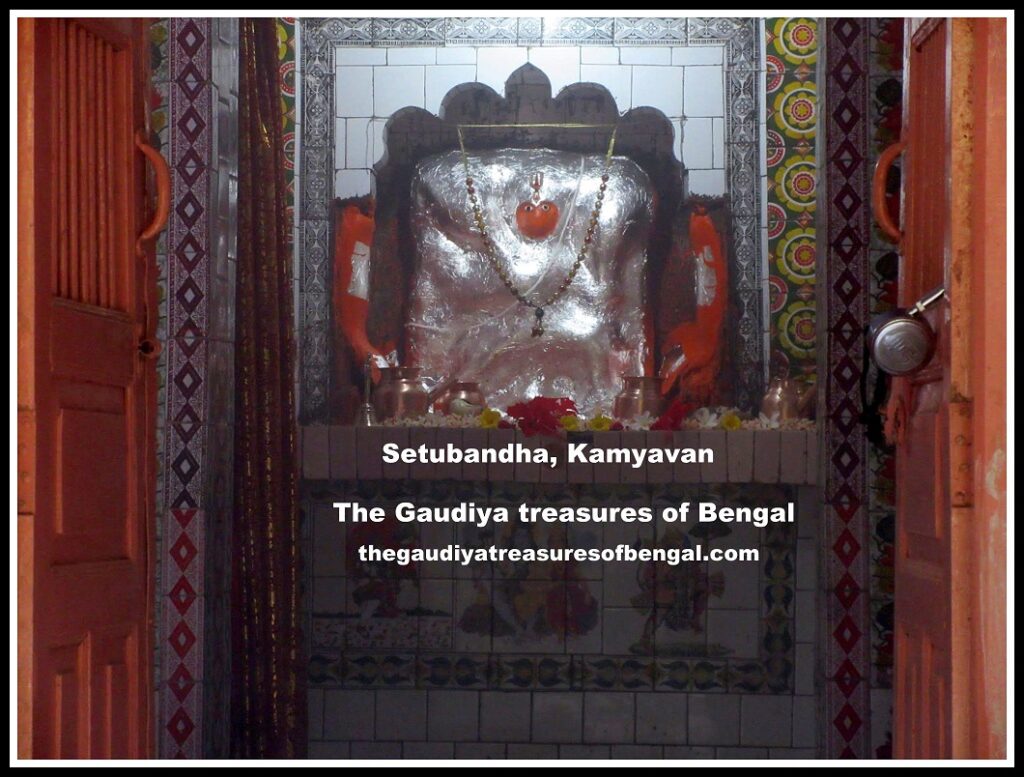
Rameshwara Setubandha is a secluded location within Kamyavana where Krishna brought to life the legend of Lord Ramachandra. Within this serene spot, one can witness a temple of Lord Shiva called Rameshwara Mahadeva, which symbolizes the sacred Dhama of Rameshwara located in the southern region of India. Setubandha, on the other hand, marks the place where Lord Ramachandra constructed a magnificent stone bridge to cross the vast Indian Ocean and reach the island of Lanka. The temple is situated at one end of a stone bridge that once spanned across a small lake named Setubandha-sarovara, symbolizing the mighty Indian Ocean, and culminating at a small hill named Lanka Puri, representing Ravana’s legendary city of Lanka. Regrettably, the majority of the stones used in constructing the bridge have vanished over time. Additionally, a small forest called Ashokavana lies nearby, signifying the Ashoka garden in Lanka where Sita Devi was held captive by Ravana. Although the lake may remain dry throughout most of the year, it comes to life during the rainy season. In Sanskrit, ‘setu’ denotes ‘bridge,’ while ‘bandha’ connotes ‘link-up.’

setubandha rameshwaram kamyavan kaman

Categories
Kaman (Kamyavan)

Char Dham of Vraja Mandala, Deeg, Rajasthan – Badrinath, Kedarnath, Gangotri and Yamunotri

lakshman jhula char dham vraja

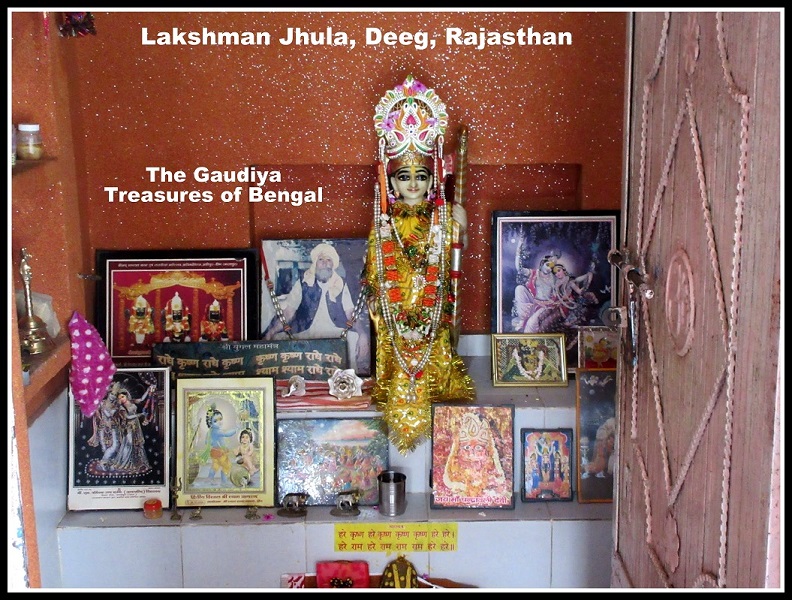
The Char Dham Yatra is a well-known religious journey in India, where devotees visit four revered sites nestled in the Himalayas – Yamunotri, Gangotri, Kedarnath, and Badrinath. The term “char” signifies four, while “dham” denotes religious destinations in Hindi. Sometimes called the “Chota Char Dham Yatra” or the smaller 4 Dham Yatra, what most people are unaware of is that all four dhams also exist eternally in Vraja Mandala, where Krishna, the source of all incarnations, and Vraja-dhama, the origin of all holy places, are found. In fact, the Badrinath, Kedarnath, Gangotri, and Yamunotri found in the Himalayas are expansions of those found in Vraja Mandala. That is why Badrinath of Vraja Mandala, for example, is also known as “Adi Badri.” Along with Krishna, all the holy dhams have descended to Vraja Mandala. It is where Krishna brought Nanda Maharaja and the other Vraja gopis to take darshan of Badrinath, Kedarnath, and the other holy dhams, so they could easily do their pilgrimage without having to travel a great distance. Along with the four dhams, one also gets the opportunity to take the darshan of Lakshman Jhula here in Vraja Mandala. Situated in the forest of Kamyavan in Vraja, these four holy dhams can be found near the town of Deeg, close to Kaman, in Rajasthan. The char dham yatra of Vraja marks the farthest point from the center of the Vraja Mandala Parikrama, and from here, the parikrama begins to head back. This article will provide a brief description of the location and pastimes of these holy dhams.

error: Content is protected !!